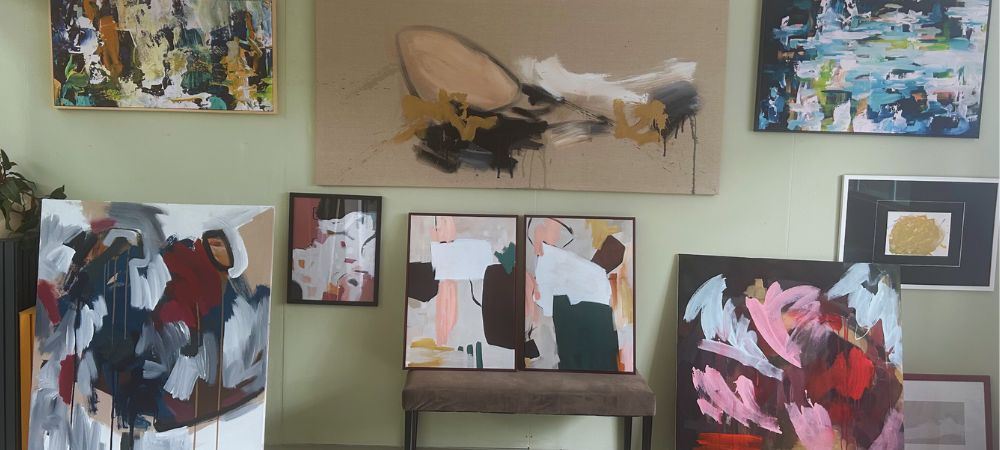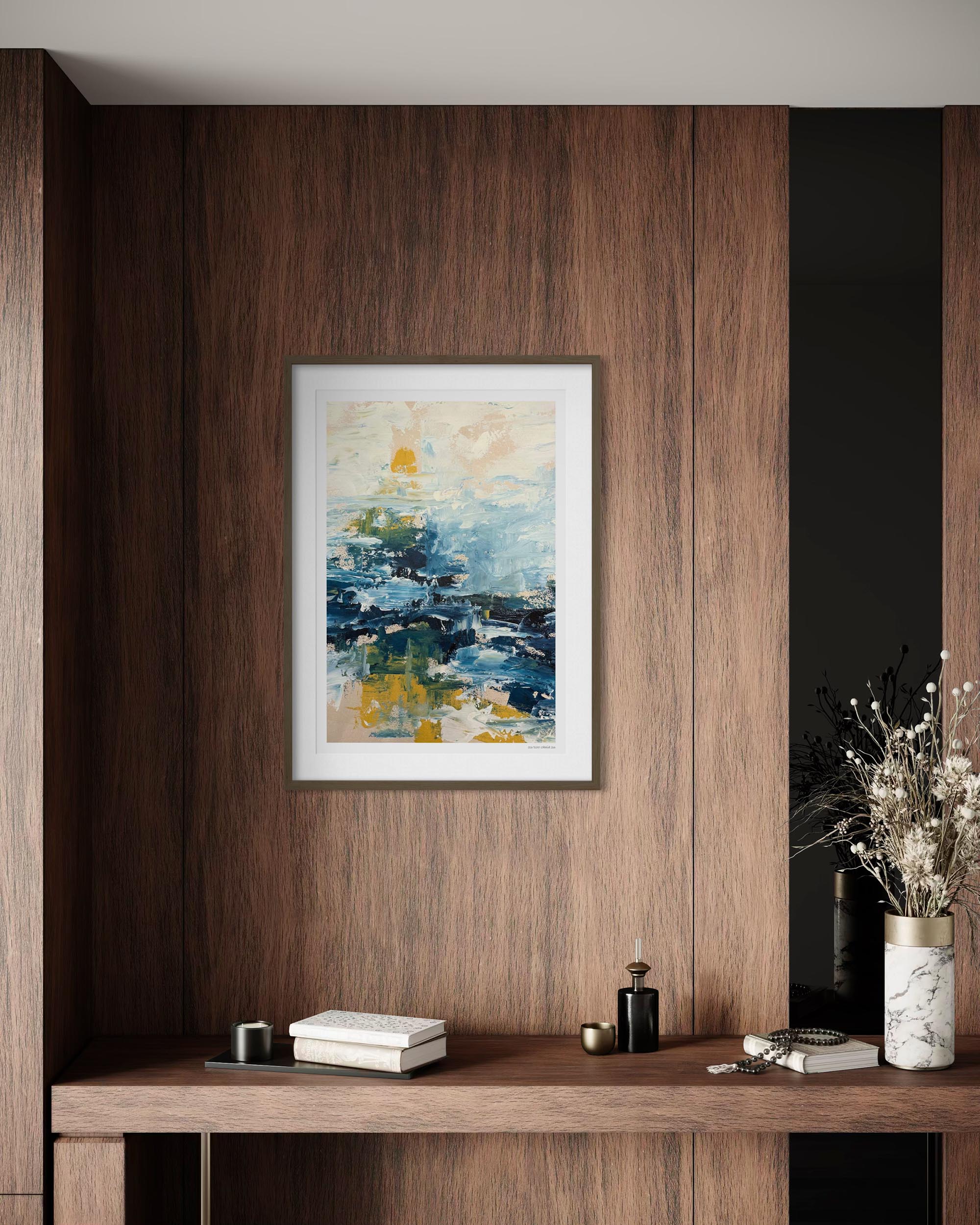

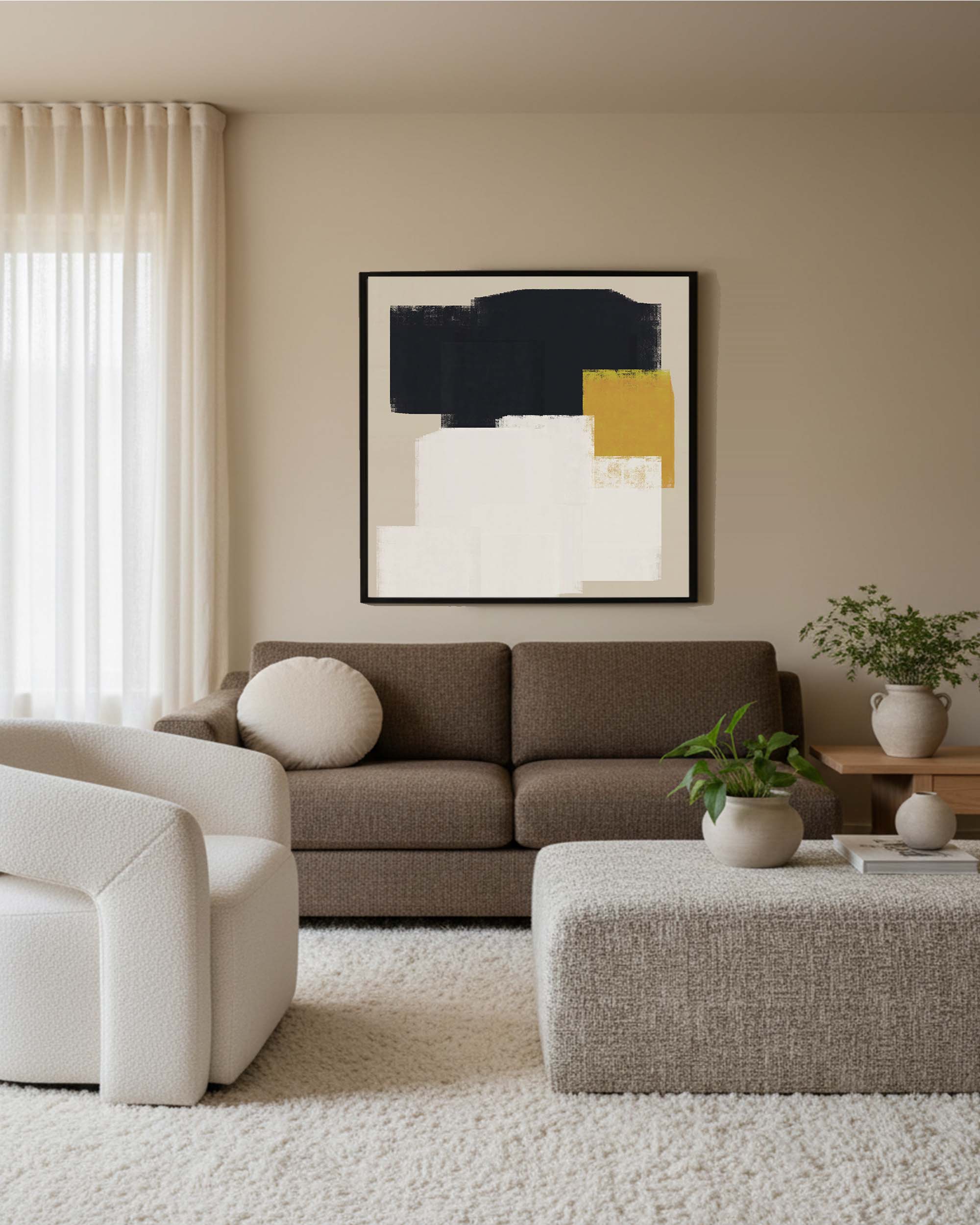
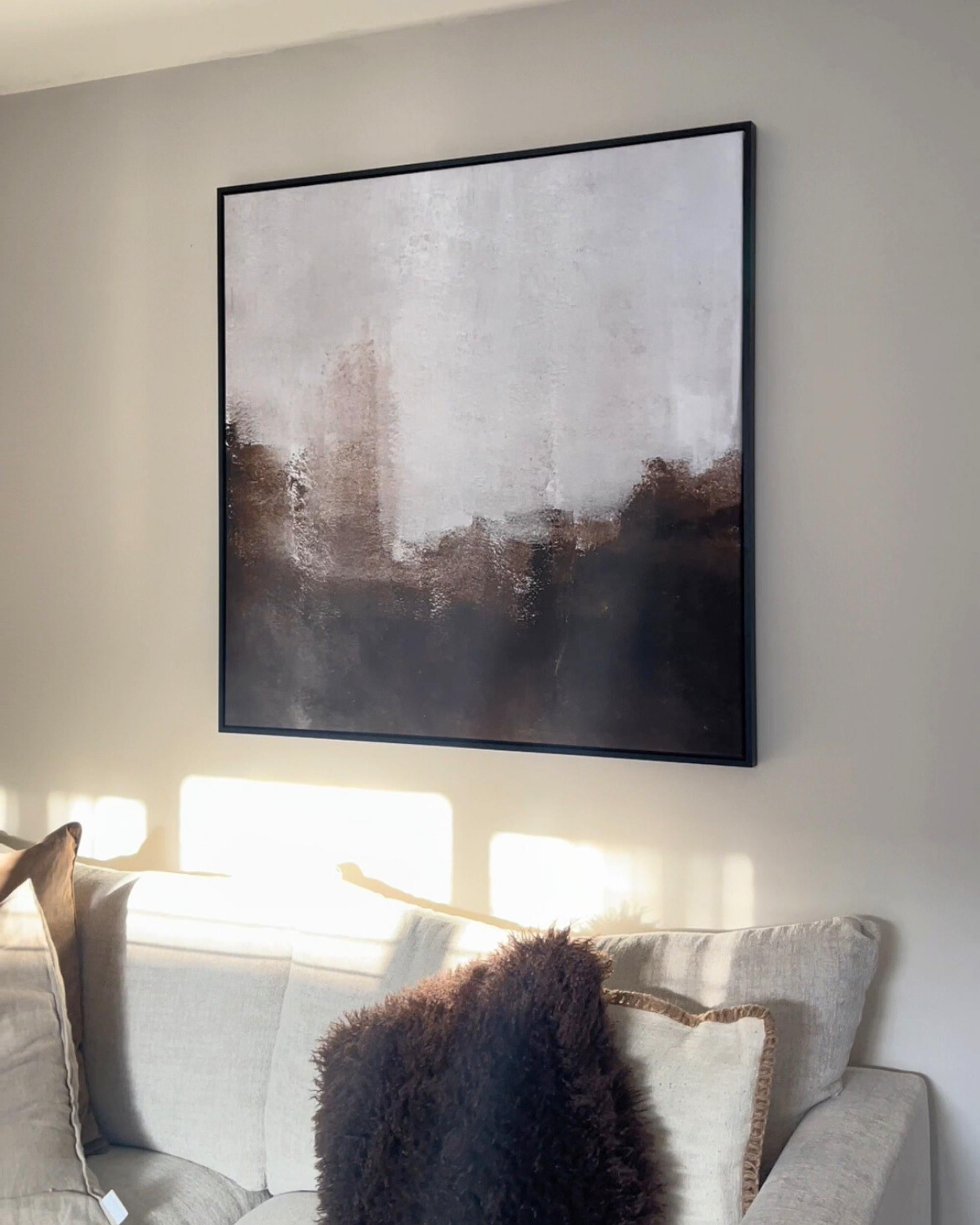
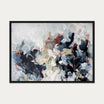

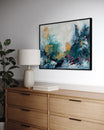
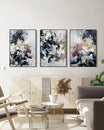

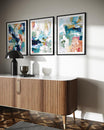

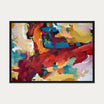
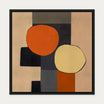
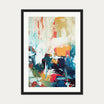
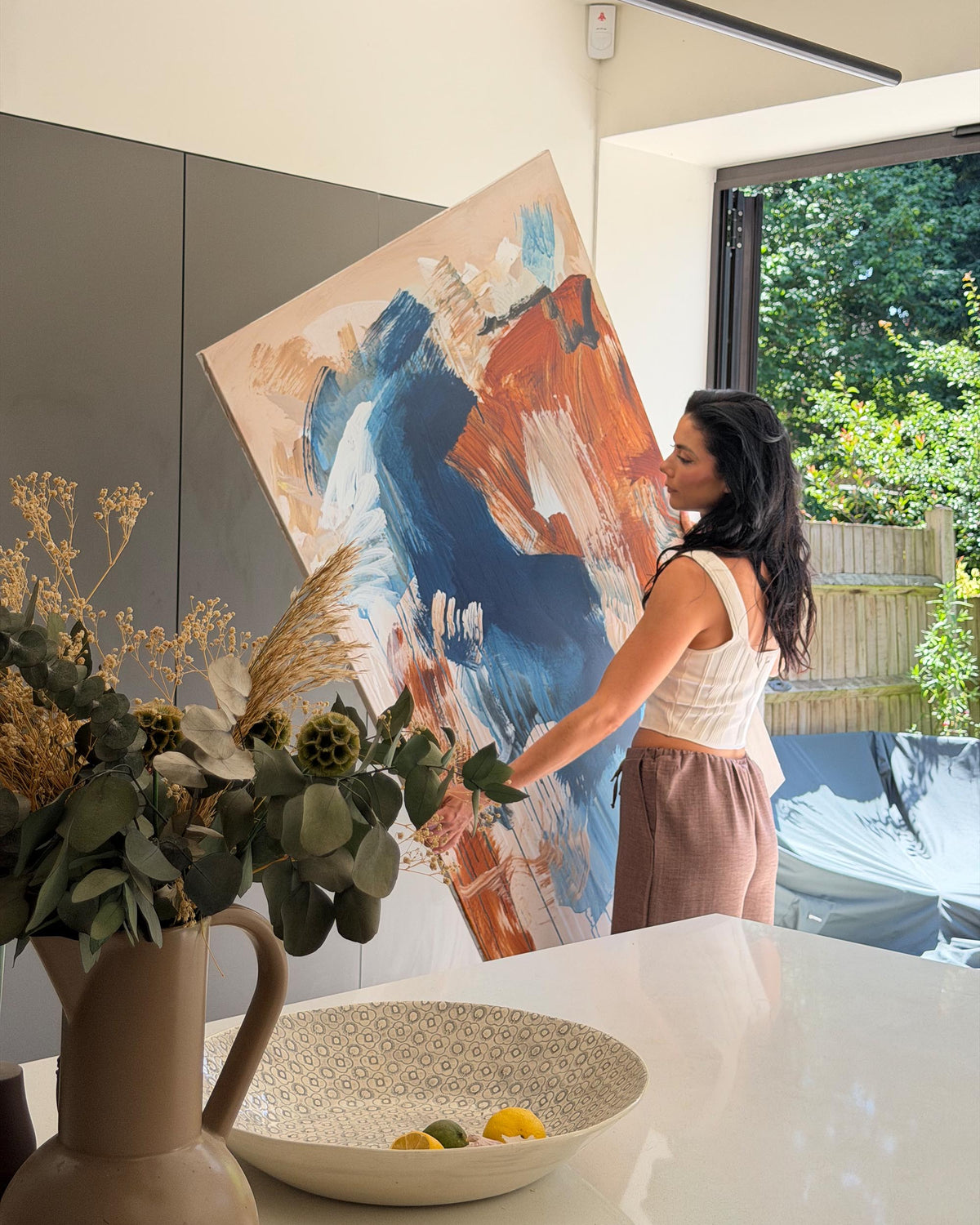
Something changes when you take a print off a wall and replace it with an original painting. Not everything changes — the room is still the room, the sofa is still the sofa — but the relationship between you and the thing on the wall shifts in a way that is difficult to explain and immediately felt.
Psychologists have a name for the underlying phenomenon: the contagion effect. We attribute to physical objects something of the essence of the person who made or owned them. A football signed by a player you admire is not, technically, a better football than an identical unsigned one. But it is experienced differently: more charged, more meaningful, more alive. The same principle operates with original art. The knowledge that a painting was made by one pair of hands — that the marks on its surface are the direct trace of someone's decisions, on that specific day, in that specific state of mind — is not just intellectual information. It changes what you see when you look at it.

What an Original Painting Actually Contains
When you look at a reproduction — however high-quality, however well-printed — you are looking at a translation. The reproduction converts the painting into data (a digital scan or photograph) and then converts that data back into an image. What is lost in that translation is everything that exists in the physical object: the texture of the paint surface, the variations in impasto, the way the brushwork catches light from one angle and flattens from another, the tiny decisions — a half-centimetre variation in a line, a colour shifted in a second pass — that are legible in the original and absent from any copy.
Original paintings have physical presence in the way that reproductions do not. They are three-dimensional objects. The surface of an oil painting on canvas is a landscape at the micro level: ridges, valleys, smooth passages, thick accumulations of paint. When the light changes in a room, an original changes with it. At 8am on a grey morning it will look different from how it looks at 6pm with the lamps on. This is not a failing of original art — it is one of its most compelling qualities.

The Question of Rarity
There is one of this painting in the world. One.
That is not a marketing claim. It is a statement of ontological fact. And it has consequences. Owning something that cannot be replicated — that the artist themselves could not recreate exactly, because the specific conditions of that day, that studio, that state of mind no longer exist — is categorically different from owning something of which there are a thousand identical copies.
This is why original paintings, even at comparable prices to high-quality prints, deliver a different kind of satisfaction. The collector's experience is not simply aesthetic — it involves a relationship with the work, with the history of its making, and with the knowledge of its singularity. Many collectors describe original paintings as things they live with rather than things they look at: objects that change in their attention over months and years, revealing new aspects as the viewer changes.
The Relationship with the Maker
When you buy a print from a large online retailer, you are buying an image. When you buy an original painting — particularly when you buy it direct from the artist or studio — you are entering a relationship with a person and a practice. You know where the work was made. You may know something about why. You can, if you choose, speak to the painter about the work.
This is not a sentimental nicety. It is what distinguishes collecting from decorating. Collectors build relationships with artists over years; they follow a practice, acquire multiple works, and develop a genuine understanding of the language an artist is working in. This relationship has practical value — collectors with close relationships to artists often have access to new work before it reaches the market — but its more important dimension is simply human. You are engaged with another person's creative life, and that engagement enriches your experience of the work on your wall.

When Does an Original Painting Make Sense?
Not every context calls for an original. There are plenty of situations — a rented flat, a children's bedroom, a space being used temporarily — where a well-chosen print is the sensible choice.
But there are moments when only an original painting will do. The home you intend to live in for years, where the work you choose will become part of the fabric of daily life. A significant room — a sitting room, a bedroom, a home office that is genuinely yours — where the quality of the space reflects the quality of your attention. A gift for a significant occasion. A commission for a building that deserves to be more than another well-furnished box.

These are the moments when the one-of-a-kind effect matters most. Not because originals are more expensive (though they often are). Not because they signal status (though they can). But because they do something that no reproduction can: they fill a room with the presence of a human decision made in a specific moment in time. They are, in the most literal sense, irreplaceable.
Which is exactly why, once you own one, the prints start to look like what they always were.
Abstract House produces original paintings in our London studio — handmade, museum-quality, made to last. Browse the current collection at abstracthouse.com, or book an art consultation with Summer Obaid to find the right work for your space.