


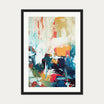
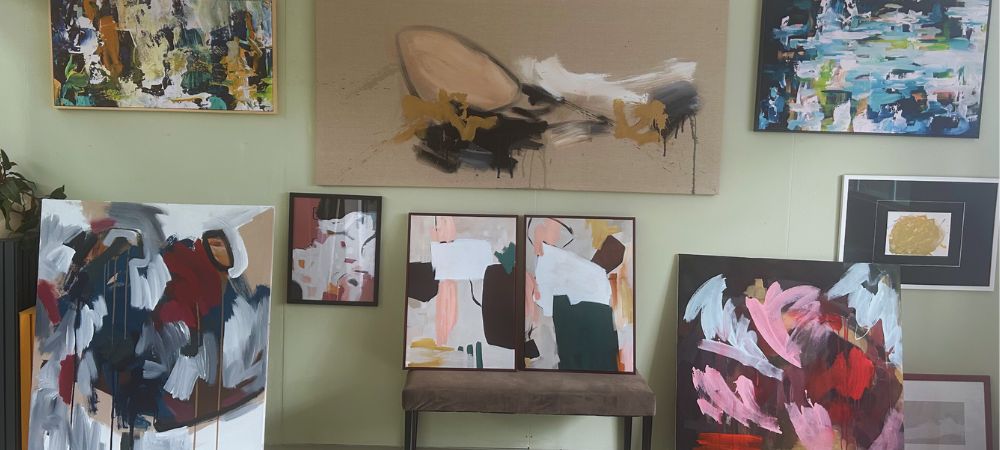
There is a moment every collector remembers: the first time a piece of art stopped them mid-step. Buying fine art for the first time should feel like that — instinctive, exciting, a little transformative. Yet for many first-time buyers, the process feels opaque. What makes a piece "original"? How do you judge quality? What should you actually spend?
Whether you're investing in art for the first time, or already have a collection you are looking to add to, the art market has evolved in recent years, and we're here to help you navigate those changes and discover your perfect artwork, while making the process as smooth as possible. Discover all you need to know about buying fine art in our simple guide.
This guide answers those questions with the clarity you deserve. Whether you're searching for a large abstract painting for your living room or your first investment-worthy original, the principles below will help you buy with confidence — and choose a piece you'll still love in twenty years.
There are a few simple tips that can ensure you choose a timeless investment piece that can increase in value over time.

Why Original Art Belongs In Your Home
Mass-produced prints fill a wall. Original art transforms a room.
An original painting carries the artist's hand in every brushstroke, with texture, intention, and a presence no reproduction can replicate. In design terms, a single statement piece does more for a modern interior than any amount of accessorising. It anchors the room, sets the palette, and signals a point of view.
There's also the matter of value. While no one should buy art purely as an investment, original works by practising artists hold their worth in a way prints never will. You're acquiring something singular, a one of one, and that rarity matters, both emotionally and to future-proof your investment.
Before You Acquire A Painting - What Actually Matters?
1. Where will the piece live?
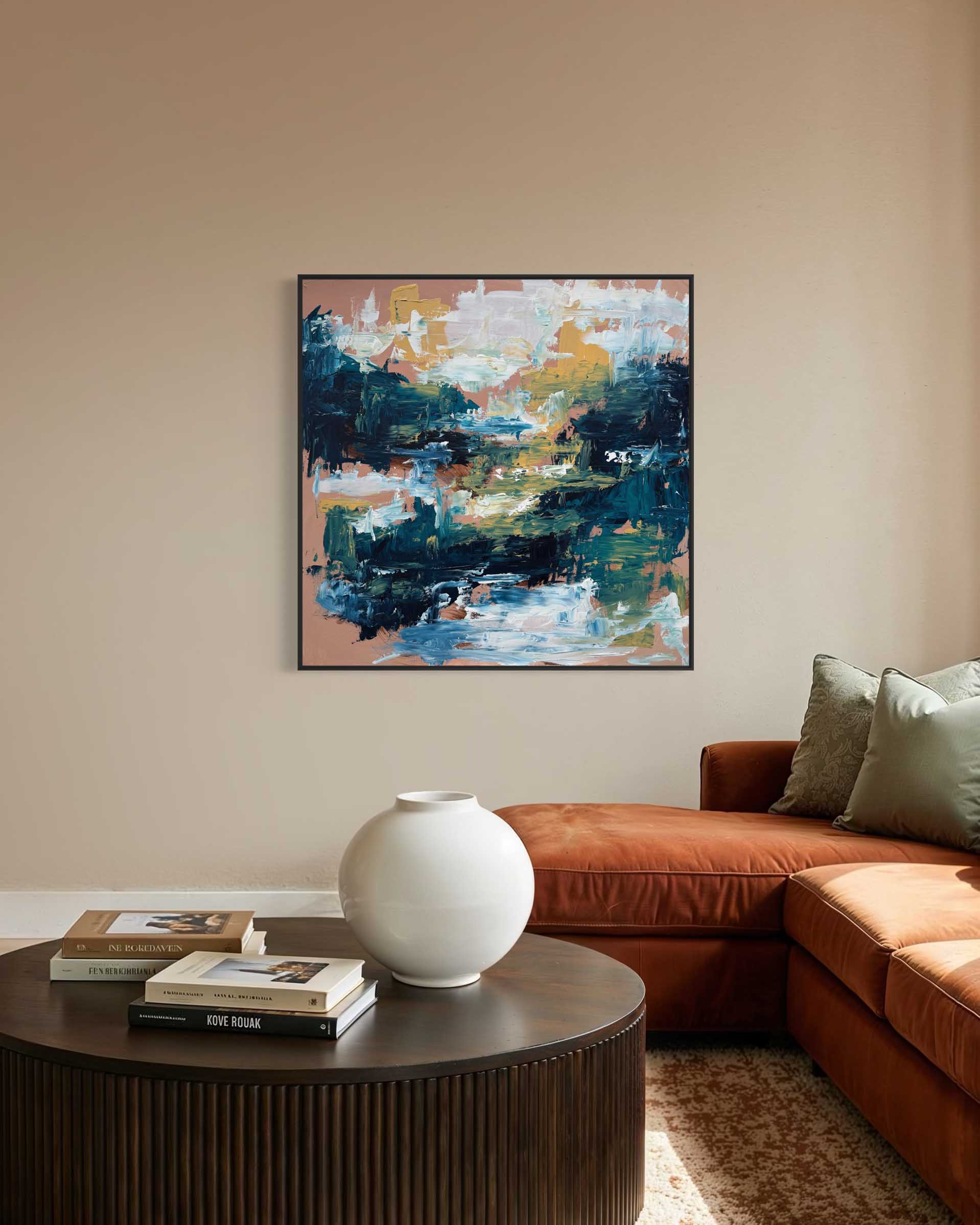
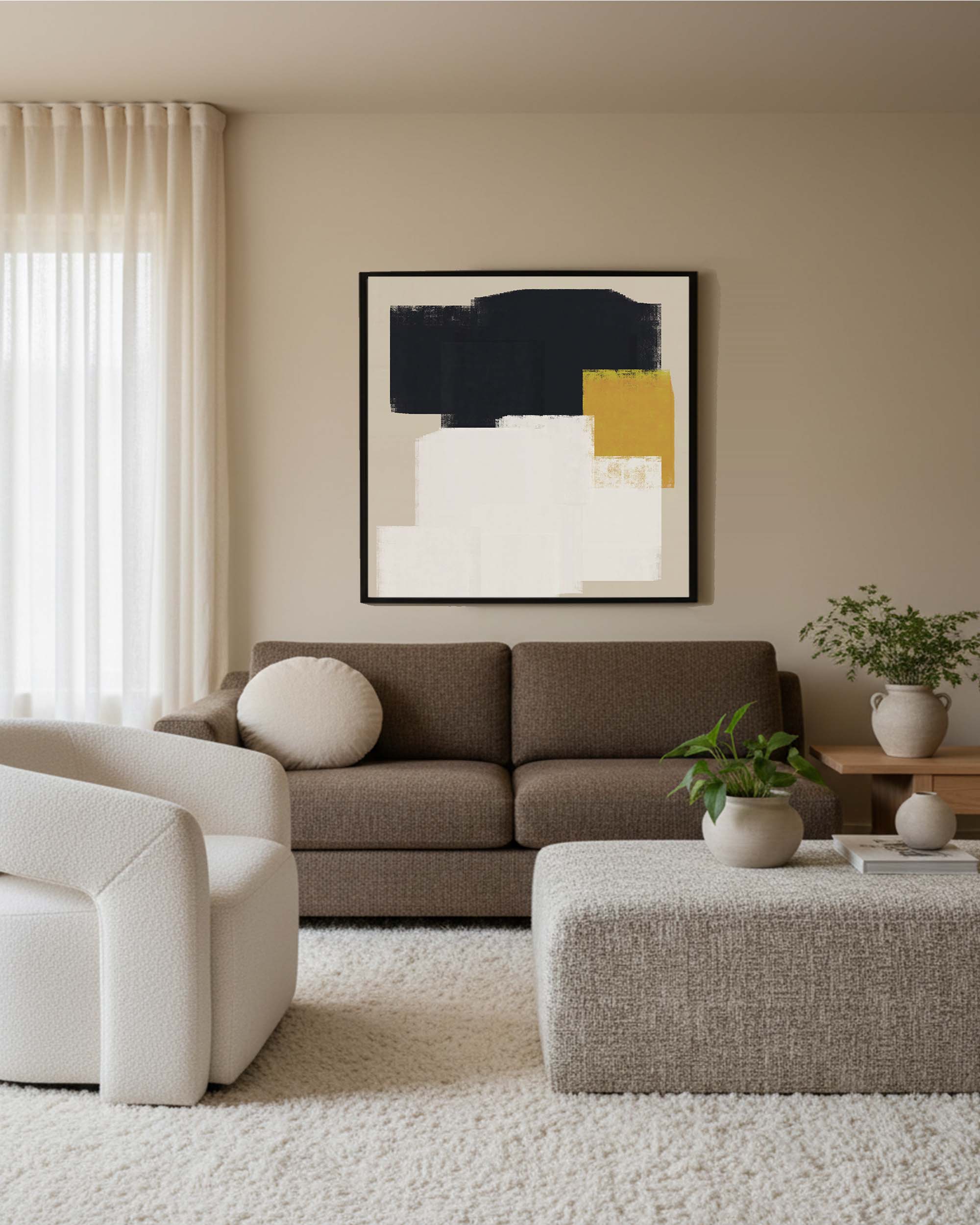
Start with the room, not the artwork. A generous wall above a sofa calls for scale — typically a canvas at least two-thirds the width of the furniture beneath it. Undersized art is the most common first-buyer mistake; a piece that's too small makes even a beautifully designed room feel hesitant.
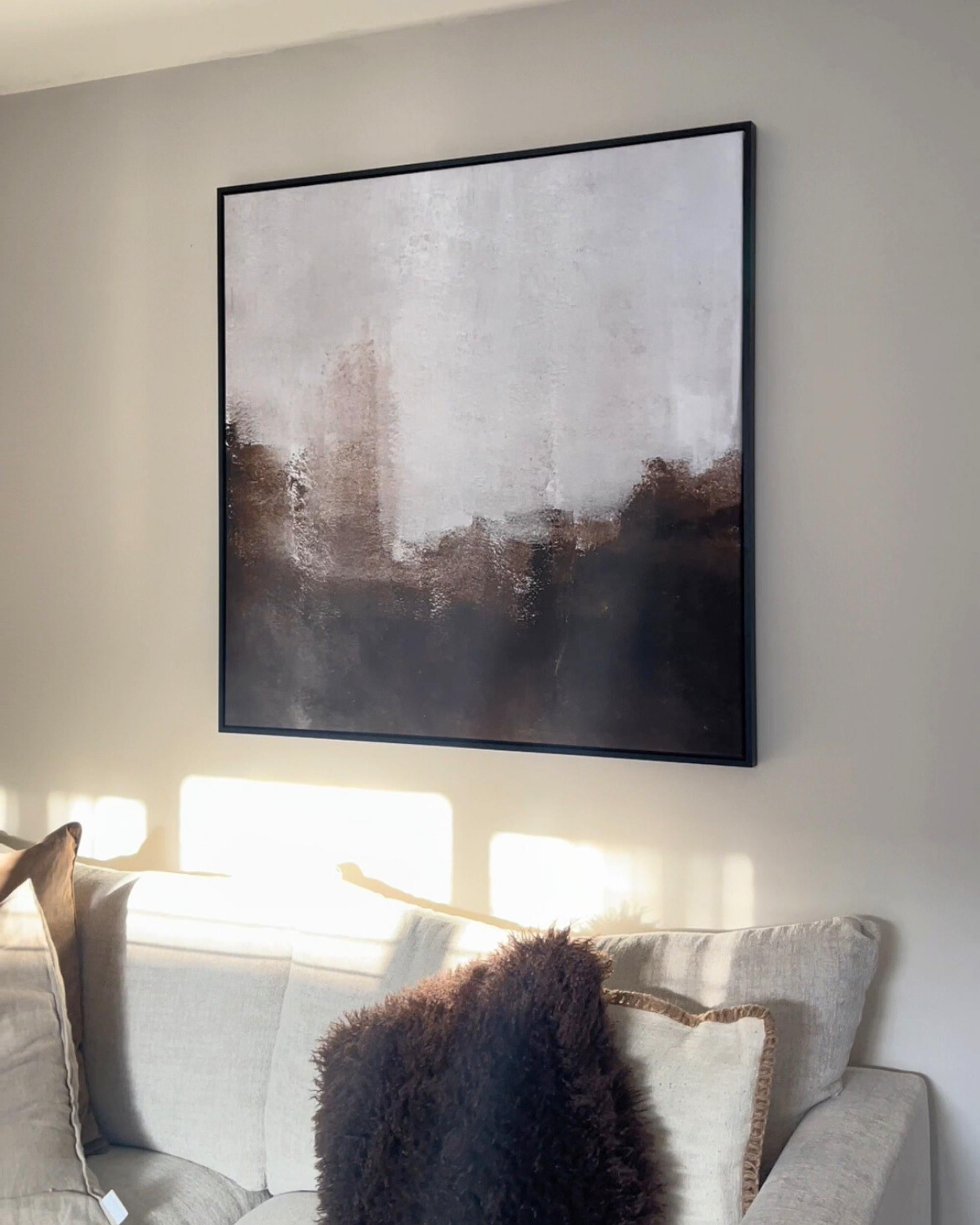
Consider light, too. Natural daylight reveals texture and depth in original paintings, particularly abstract work with layered or sculptural surfaces.
2. What draws you in — honestly?
Forget what you think you should like. The right piece is the one you keep returning to. Abstract art, in particular, rewards instinct: colour, movement and composition speak before any intellectual interpretation does. If a painting holds your attention for more than a few seconds — if you find yourself imagining it in your space — pay attention to that.
3. What is your realistic budget?
Original fine art in the UK spans an enormous range. As a first-time buyer, expect quality original paintings from established independent artists to start in the high hundreds and move into the thousands for large-scale statement works. Set a range rather than a ceiling, and remember: a single exceptional piece will serve you better than several compromises.
How to Judge Quality in Original Art
You don't need an art history degree to recognise craftsmanship. Look for:
Materials and construction. Gallery-quality work is painted on properly stretched, professional-grade canvas or panel, using artist-quality pigments that resist fading. Deep-edge canvases that can hang unframed are a hallmark of contemporary abstract work.
Surface and detail. Stand close. Original paintings reward inspection — layered glazes, confident mark-making, texture you could trace with a finger. The art truly is in the detail; this is where originals separate themselves from prints at a glance.
Provenance and authenticity. A reputable artist or gallery will provide a signed certificate of authenticity. This documents your purchase, protects its value, and matters if you ever insure or resell the work.
A coherent body of work. Browse the artist's wider portfolio. A consistent, developed visual language signals an artist with genuine authority — and a piece that belongs to something larger than a one-off experiment.
Choosing Art for Your Space
Living rooms: lead with scale
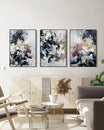
The living room is where statement art earns its keep. Large abstract paintings — 100cm wide and upwards — create the focal point modern interiors are designed around. Choose a palette that converses with your room rather than matching it exactly; the most successful pairings introduce one or two new tones that lift the whole scheme.
Bedrooms and quieter spaces
Softer palettes and more contemplative compositions suit rooms designed for rest. This is where subtler abstract work — tonal, atmospheric, textural — comes into its own.
Hallways, stairs and unexpected walls
Some of the most memorable placements are the least obvious. A bold piece at the end of a hallway or on a stairwell landing turns a transitional space into a moment of arrival.
Buying Original Art Online in the UK: What to Expect
Buying directly from an artist's own website has become the preferred route for many UK collectors — and for good reason. You see the full available collection, you deal with the artist or studio directly, and prices aren't inflated by gallery commission.
Before you commit, check for:
- Detailed photography, including close-ups of texture and in-situ images for scale
- Clear dimensions — measure your wall before you browse, not after
- Insured, tracked delivery, properly packaged for original artwork
- A straightforward returns policy, so you can buy with complete confidence
- Direct contact with the studio for questions about a specific piece, commissions, or advice on placement
A serious artist's website will make all of this easy to find. If it doesn't, keep looking.
The First Purchase: Trust the Piece That Stays With You
Here is the truth experienced collectors know: the best first purchase is rarely the safest one. It's the painting you couldn't stop thinking about — the one with presence, originality and that unmistakable pull.
Buy the piece that stops you mid-step. Everything else in this guide exists simply to make sure that when you do, you do it well.
Ready to find your first original? Explore the current collection of original abstract paintings, or get in touch for advice on choosing the right piece for your space.

Every Question You Were Afraid to Ask About Buying Art
How do I know the artwork is authentic?
Authenticity rests on documentation, and any reputable studio or gallery should provide it without you having to ask. For limited edition prints, that means a Certificate of Authenticity (COA) — a document signed by the artist or publisher that states the edition number, total edition size, print process, paper, and date of production. For original paintings, it means a signed invoice, a provenance record, and in many cases a signed verso on the canvas itself.
Provenance is the documented history of an artwork: who made it, when, how it was sold, and who has owned it. A clear, traceable provenance protects you both now — confirming you're buying the real thing — and in the future, should you ever wish to resell or include the work in an estate.
Is it safe to buy art online? How do I vet a seller?
Buying art online is now entirely mainstream — but the quality of sellers varies enormously. The signals of a trustworthy source are consistent: detailed product information (paper specification, print process, edition size), a clear returns policy, insured shipping, responsive customer service, and honest photography that doesn't misrepresent scale or colour.
Beyond the basics, look for a studio or gallery that maintains a relationship with the artist, publishes editorial content about their collection, and stands behind their work after the sale. If a platform makes it difficult to ask questions before purchase, that tells you something important about the experience you'll have if something goes wrong.
- Is the paper and print specification clearly stated?
- Is there a Certificate of Authenticity included?
- Is shipping insured and tracked?
- Is there a clear, fair returns window?
- Is there a real person or team to contact?
- Do reviews or testimonials reflect consistent quality?
How is art priced — and am I paying a fair amount?
Art pricing reflects a combination of factors that have nothing to do with how long a piece took to make. The relevant variables are: the artist's exhibition history and critical standing, the medium and materials used, the size of the work, the rarity of the edition (if applicable), and prior sales history.
For limited edition prints specifically, pricing also reflects the production quality — the paper grade, ink archival rating, and whether the edition is hand-signed. A 50-edition giclée printed on Hahnemühle Photo Rag 310gsm with 12-colour pigment inks and a hand-signed COA is a fundamentally different object — and a different investment — to an open-edition print run on commodity stock.
The most useful frame: does the price reflect what it will cost you to have this work on your wall for ten, twenty, or fifty years? Fine art, produced properly, outlasts almost everything else in a home.
Is art a good investment?
Art is not a guaranteed financial instrument, and anyone who presents it as such deserves scepticism. That said, the honest picture is encouraging: the fine art market has historically shown resilience during periods of economic uncertainty, and certain segments have significantly outperformed other asset classes over the past decade.
Limited edition prints by established artists have been particularly strong. While speculative corners of the market (NFTs, ultra-contemporary work) saw boom-and-bust cycles between 2020 and 2023, blue-chip editions — works by artists with consistent exhibition histories and active secondary market sales — held firm and in many cases appreciated. The 2025 Art Basel & UBS Art Market Report confirmed that lower-priced segments remained the most dynamic worldwide.
The most sustainable position: buy work you genuinely want to live with. If it appreciates, that is a welcome outcome. If it holds its value, that is still better than most consumer purchases. And if you've spent a decade in the company of a painting that moves you every time you pass it — the question of financial return becomes rather secondary.
How do I know if a work will look right in my space?
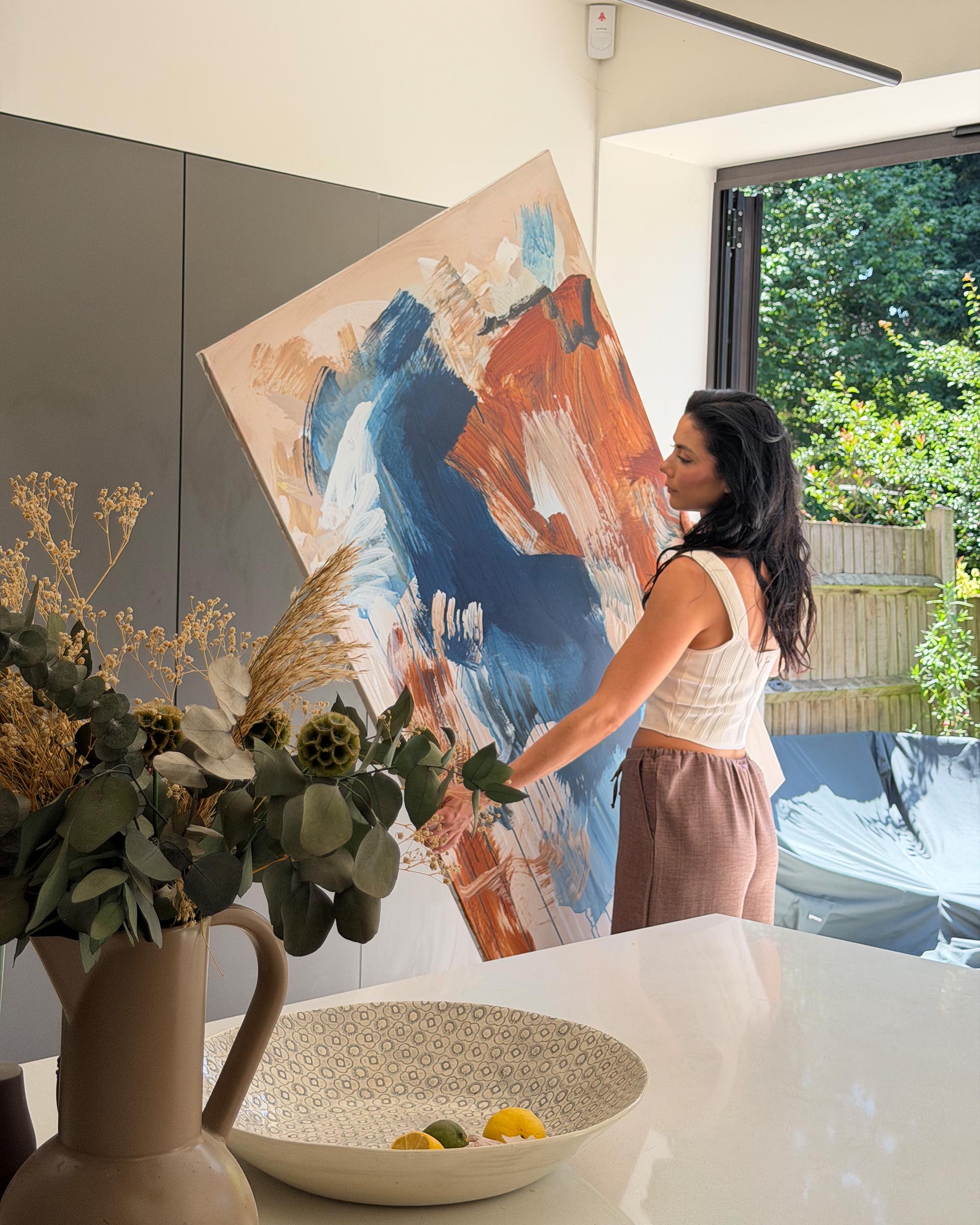
Scale is almost always underestimated. A piece that looks commanding on a gallery website can read as tentative on a large wall — and conversely, a work you think might be too bold often becomes the defining element of a room. Before purchasing, always:
- Cut paper or card to the exact dimensions of the work and tape it to your wall.
- Live with the template for 24–48 hours before deciding — your eye acclimates.
- Consider the wall colour, light direction, and furniture scale around it.
- Use any "view in a room" tools the studio provides to preview works at scale.
For online purchases, don't hesitate to request additional photography — lifestyle shots showing the work in a real interior, or detail images of texture and surface. A studio confident in their work will always accommodate this.
How do I start collecting if I don't know where to begin?
The single most useful instruction: buy what you can't stop thinking about. Not what you think you should like, not what a friend recommends, not what seems like the "intelligent" choice. The works that retain their pull — that you return to mentally when you're not in front of them — are almost always the right ones.
Start within a budget that feels comfortable, and resist the urge to fill multiple walls at once. One strong piece you genuinely respond to is worth more than five considered purchases that leave you neutral. As your collection develops, you'll notice the vocabulary of what you're drawn to — whether that's colour, mood, abstraction, restraint, scale — and that vocabulary becomes your collecting instinct.
Look at as much work as possible before buying. Visit galleries and art fairs not to buy but to calibrate your eye. The collectors who make the best decisions are those who have spent time understanding their own taste before spending money on it.
Can I pay in instalments?
Payment arrangements are more flexible across the art world than most buyers realise. Many studios and galleries offer instalment plans for works above a certain value — particularly for originals. It is entirely appropriate to ask, and a good seller will accommodate this where possible.
For newer buyers especially: the option to spread payment over two, three, or six instalments is often available but not advertised. Don't let the absence of a payment plan button on a checkout page mean you assume it isn't possible. Ask the studio directly — most would rather accommodate a collector over time to keep the customer happy.