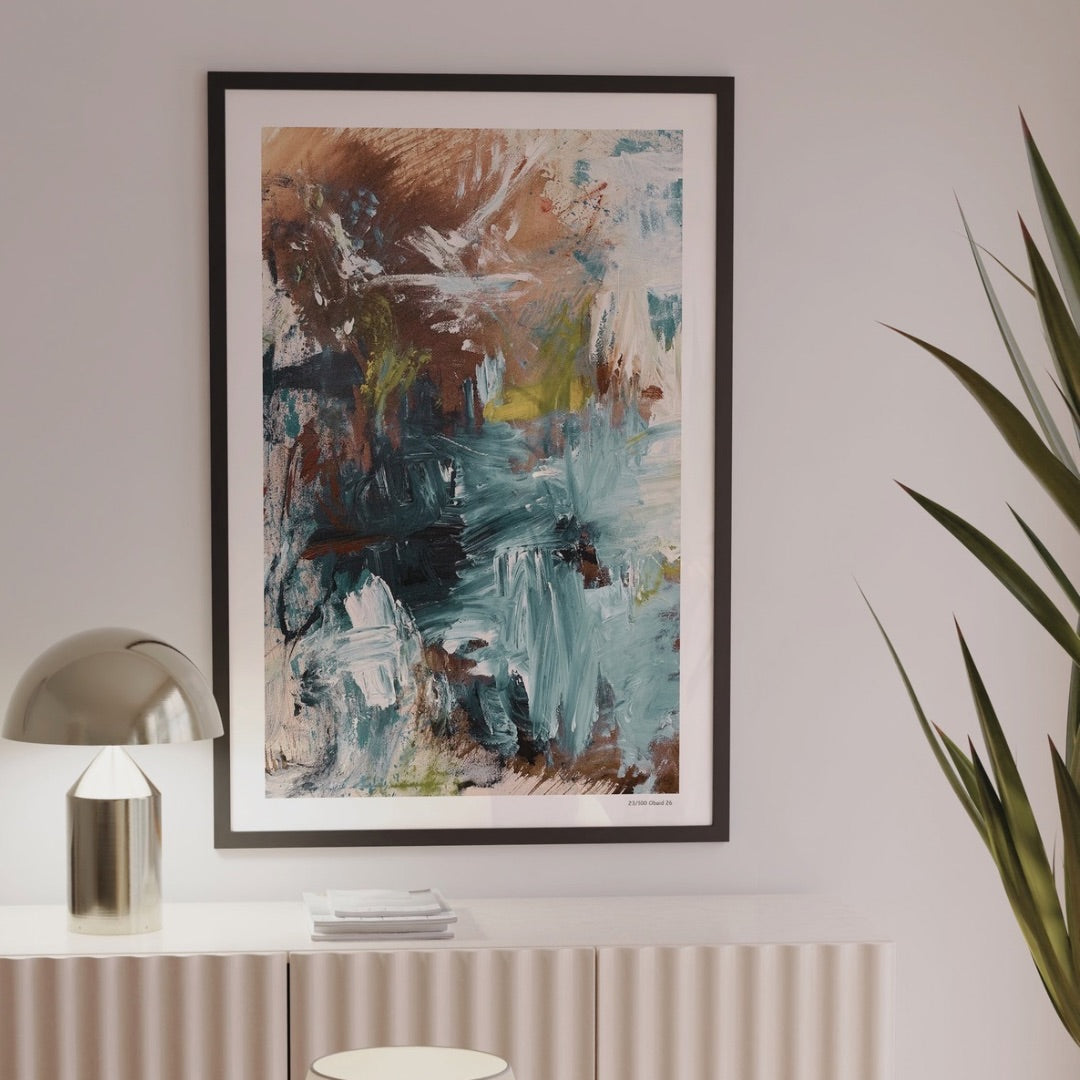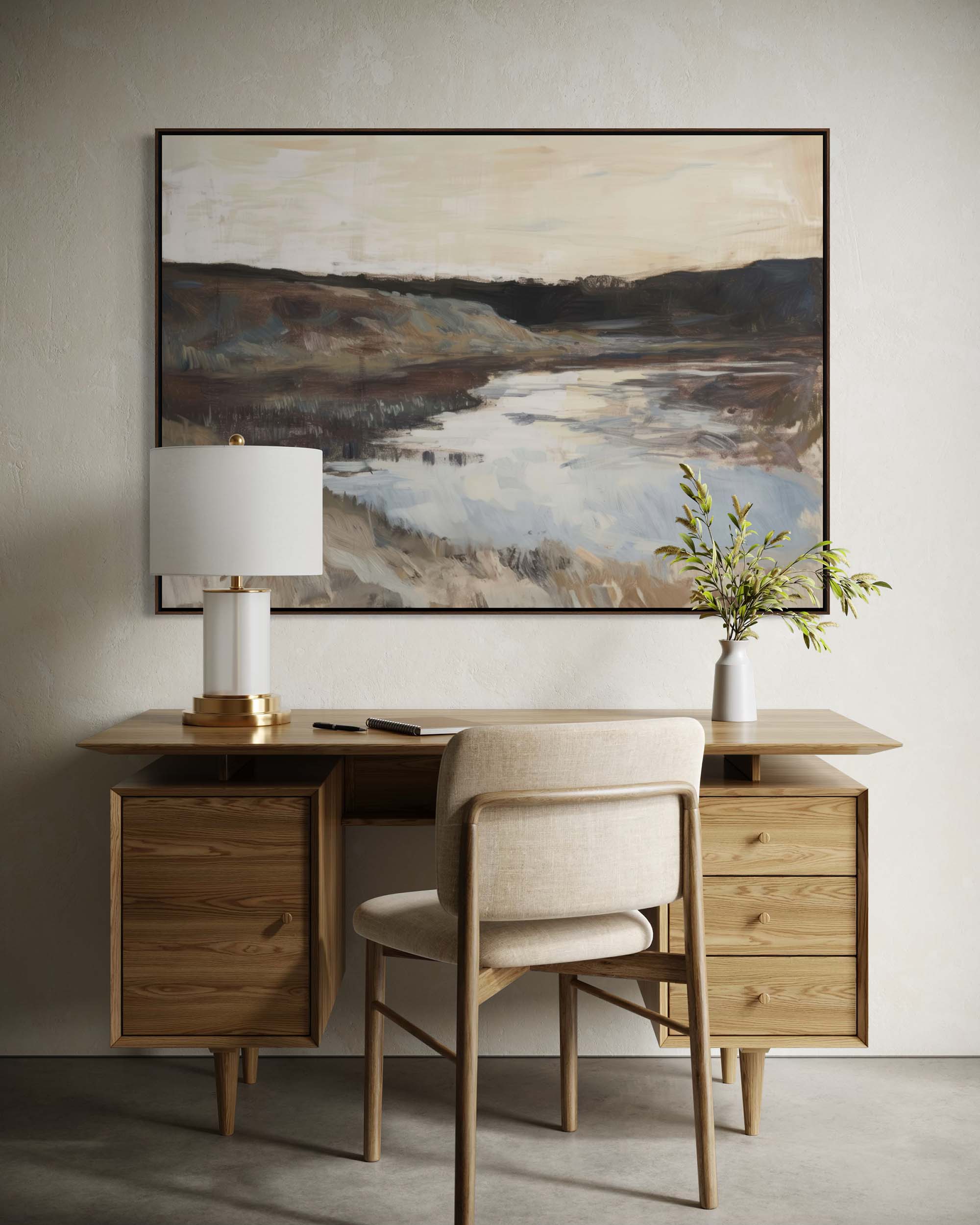

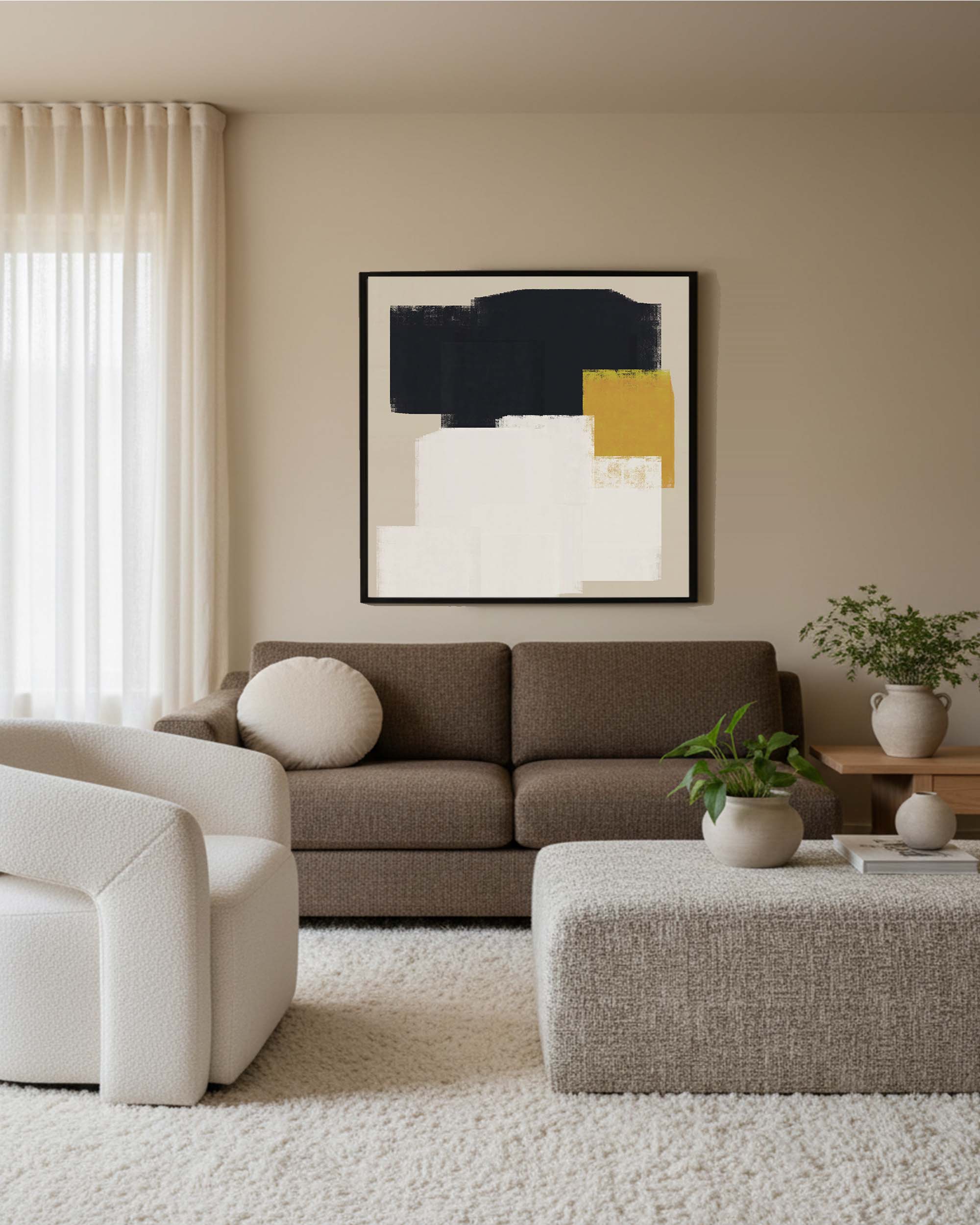
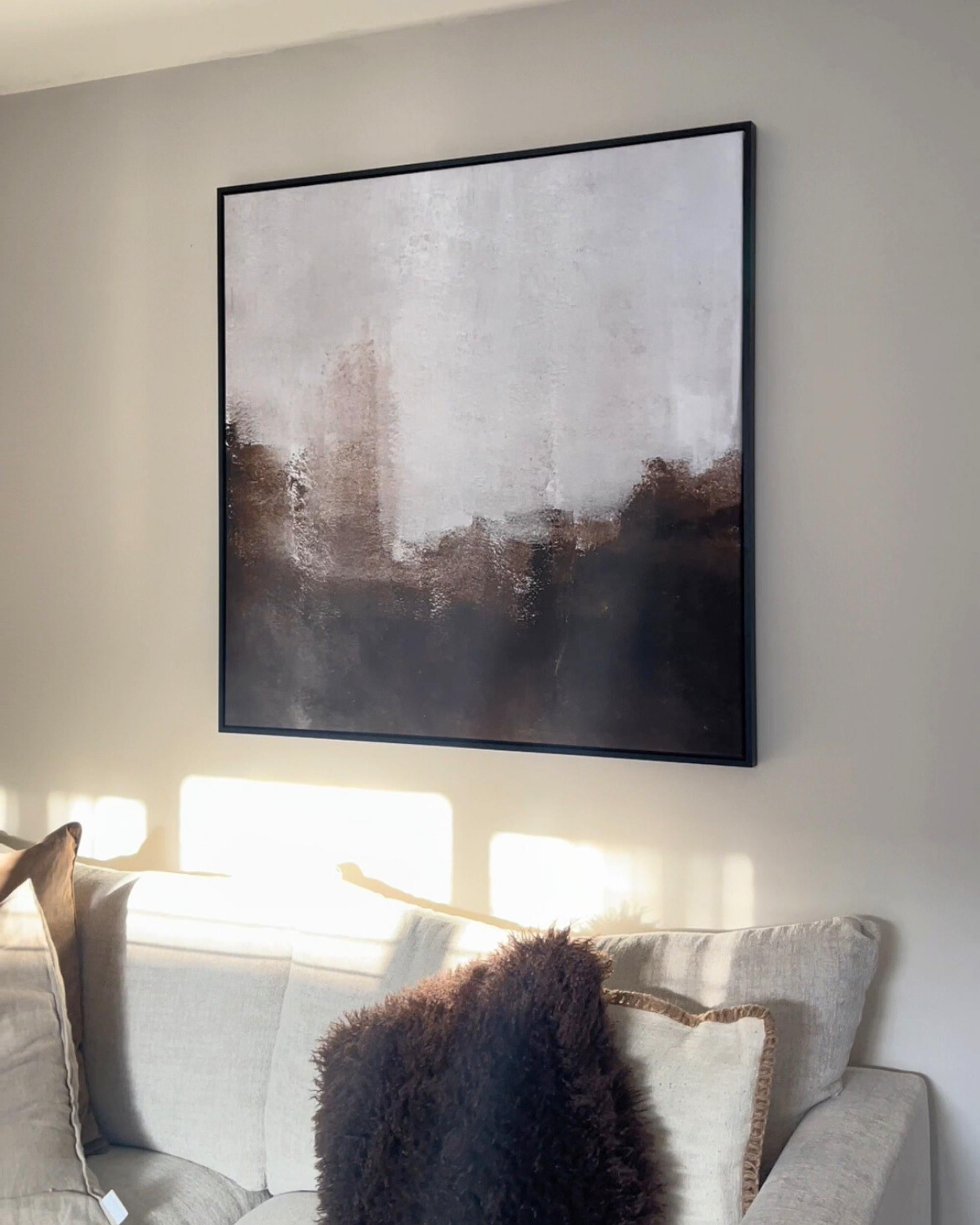






Working from home has transformed the home office from an occasional convenience into a daily environment. And daily environments shape us.
Most home offices are designed backwards. People think about the desk, the chair, the monitor — and then, if space remains, they add a print and call it done. What research tells us is that the art on the walls of a workspace is not peripheral. It is functional.

What the research shows
A study by Dr Craig Knight at the University of Exeter found that employees in enriched spaces — those with art and plants — were 15% more productive than those working in lean, undecorated environments. A separate study published in the British Journal of Psychology found that blue environments enhance creative output, while red environments improve accuracy and attention to detail.
Art in a workspace does several things simultaneously. It provides visual rest — a place for the eye to stop and reset during periods of sustained screen focus. It signals that the space has been considered, which produces a subtle effect on how seriously the person working in it takes their work. And the right piece of art, in the right colour, can tilt the room's atmosphere in the direction you need it to go.
Choosing by the nature of your work
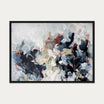
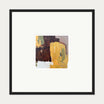
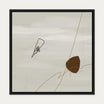
If your work is primarily analytical — finance, law, administration, detailed writing — cool, quieter palettes work in your favour. Soft greys, pale blues, clean neutrals. Work from our Pale collection, with its restrained tonal ranges and contemplative atmosphere, creates a backdrop that supports sustained focus without competing for attention.
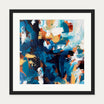
If your work is primarily creative — design, strategy, brand, writing, consulting — richer, more saturated tones can enhance your creative state. Deep teals, atmospheric blues, warm rich neutrals. Our Void collection delivers this atmospheric depth beautifully.
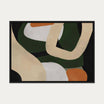
If you switch between both modes, a neutral abstract with tonal complexity — something that rewards close looking without being immediately legible — gives your eye something to rest in during transitions.

Scale and placement
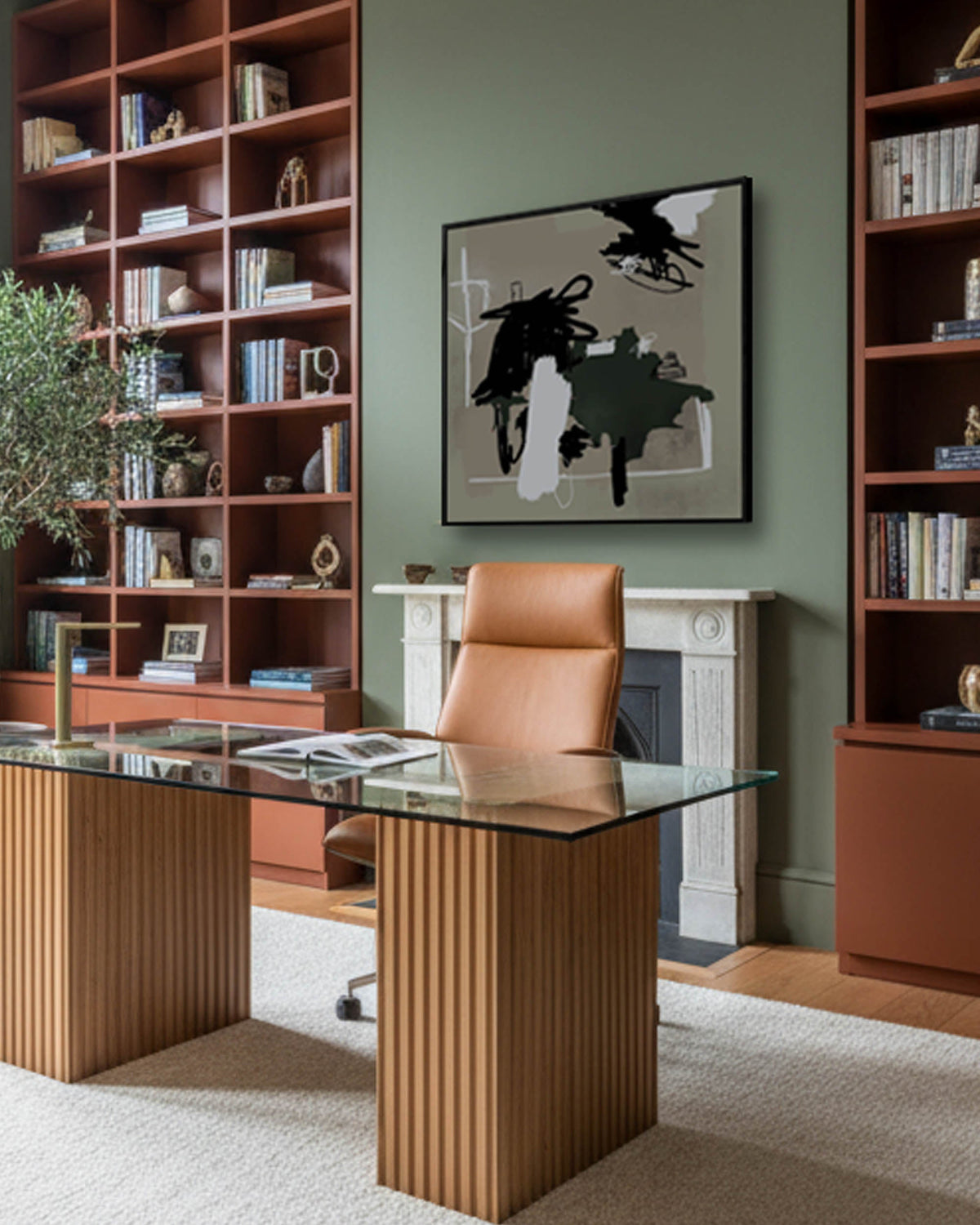
In a home office, resist the instinct to go small. A single, generous piece — 60 to 100cm wide — will anchor the space and give it the visual confidence it needs. Small work in a small room tends to feel apologetic rather than decorative.
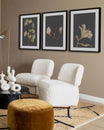
Position artwork at or just above eye level when seated. If your desk faces a wall, the art on that wall becomes your view — choose accordingly. If your desk is angled away from walls, a single strong piece behind you serves double duty: backdrop and anchor for video calls.

A note on originals
A home office is an excellent space for an original painting. The intimacy of the room means you will spend more time with the work than in almost any other space. You will notice it in different lights, across different seasons, in different moods. This is exactly the relationship that makes owning an original meaningful.