

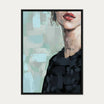
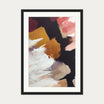
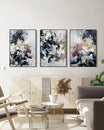
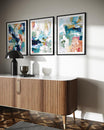
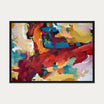
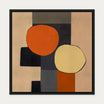
There is something quietly radical about an original painting. A single surface, worked by a single pair of hands, encoded with decisions no algorithm could have predicted. To understand why that matters — and why it has always mattered — you have to go back a long way. Further than the Renaissance. Further than Ancient Greece. All the way to a cave wall in southern France, where someone reached up with ochre-stained fingers and said, in the only language available to them: I was here. I made this.
Fire and Earth: Prehistoric Painting
The earliest confirmed paintings date to around 40,000–45,000 years ago. At sites like the Chauvet Cave in the Ardèche and Altamira in northern Spain, Palaeolithic artists ground minerals — ochre, haematite, manganese oxide — into powder, mixed them with animal fat or water, and applied them to stone with their hands, crude brushes, or by blowing pigment through hollow bones. They painted bison, aurochs, horses, and rhinoceroses with a fluency and dynamism that still astonishes contemporary viewers. These were not decoration. Anthropologists believe they were ritual — acts of mark-making intended to communicate with the world beyond the visible.
What these early artists understood, intuitively, is the same thing that animates painting today: that the act of applying pigment to a surface by hand transforms raw material into meaning.

Egypt, Greece, and the Roman Wall
By 3,000 BCE, the Egyptians had turned painting into a formal discipline. Their system was rigorous: hierarchical scaling (the most important figure drawn largest), fixed colour conventions (men painted in terracotta, women in yellow ochre), and a consistent canon of proportions. Egyptian painting was not about individual expression — it was about cosmic order. The painter was not an artist in our modern sense; they were a craftsperson serving the afterlife.
The Greeks and Romans expanded painting into domestic life. Roman villas at Pompeii and Herculaneum preserve extraordinary examples of illusionistic wall painting — trompe l'oeil columns, imaginary landscapes, mythological scenes — demonstrating that by the first century CE, painters already understood perspective, shadow, and the art of making a flat surface appear three-dimensional.
The Renaissance and the Birth of the Individual Artist
The Renaissance (14th–17th century) changed everything by doing something that now seems obvious but was then revolutionary: it put the artist's name on the painting. Before the 15th century, the identities of most painters were either unknown or irrelevant. What mattered was the subject — the Madonna, the altarpiece, the patron saint. But Florentine painters like Giotto, Botticelli, and later Leonardo, Michelangelo, and Raphael became, for the first time in Western history, individuals whose personal vision was considered as important as the religious subject they depicted.
This shift had profound consequences. It gave rise to the concept of genius, to the idea that a painting's value was inseparable from the mind and hand that made it. It is the same logic that still animates the contemporary art market: the reason a painting by a living artist commands more than a reproduction is not merely material — it is ontological. The hand that made it, and the life from which it emerged, are embedded in the surface.

Oil Paint and the Northern Masters
The development of oil paint in the early 15th century — typically credited to Jan van Eyck in Flanders — was a technical revolution as significant as the invention of photoshop. Oil paint dries slowly, which means it can be blended, reworked, and layered over weeks or months. It is translucent, allowing painters to build up luminous glazes. It captures texture and light in ways tempera (the dominant medium previously) simply could not.
The Northern European masters — van Eyck, Vermeer, Rembrandt — used oil paint to achieve an almost photographic verisimilitude: the gleam of pearls, the warmth of candlelight on skin, the weight of velvet. In Italy, Titian used it for the opposite effect: to build colour fields of extraordinary richness and sensuality. Oil on canvas became the dominant medium of Western fine art for the next 500 years, and remains so today.
Impressionism: When Painting Went Outside
The Impressionists — Monet, Renoir, Pissarro, Degas — caused a scandal in the 1870s not because they were painting badly but because they were painting differently. Working en plein air (outdoors), using loose brushwork, unblended colour, and capturing transient light effects rather than polished subjects, they broke decisively with the academic tradition. The Royal Academy in London and the Paris Salon both rejected them. Critics mocked the unfinished-looking surfaces.
Needless to say, history sided with the Impressionists. Their willingness to trust the subjective experience of the painter — the feeling of standing in a garden at noon, the shimmer of water at dusk — opened the door to everything that followed: Post-Impressionism, Fauvism, Expressionism, Abstraction. The entire arc of 20th-century painting descends from the Impressionist decision to put the painter's perception ahead of convention.

The 20th Century and Beyond
The 20th century accelerated painting's possibilities faster than any previous era. Picasso and Braque fractured the picture plane into Cubism. Kandinsky painted pure abstraction, declaring that colour and form could carry emotional weight without representing anything. Pollock dripped, Rothko floated colour, Basquiat wrote directly on the canvas with something between text and image. Each of these departures asked the same fundamental question: what is the minimum a painting needs to be a painting?
The answer, it turns out, is: a surface, a hand, and an intention. Which is exactly what it was 40,000 years ago in the Ardèche.
Today, original painting continues to evolve — incorporating digital tools, found materials, and cross-disciplinary influences — while remaining, at its core, the same act of transformation. Pigment. Surface. Presence.
That continuity is not a weakness. It is the whole point.
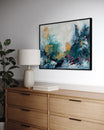
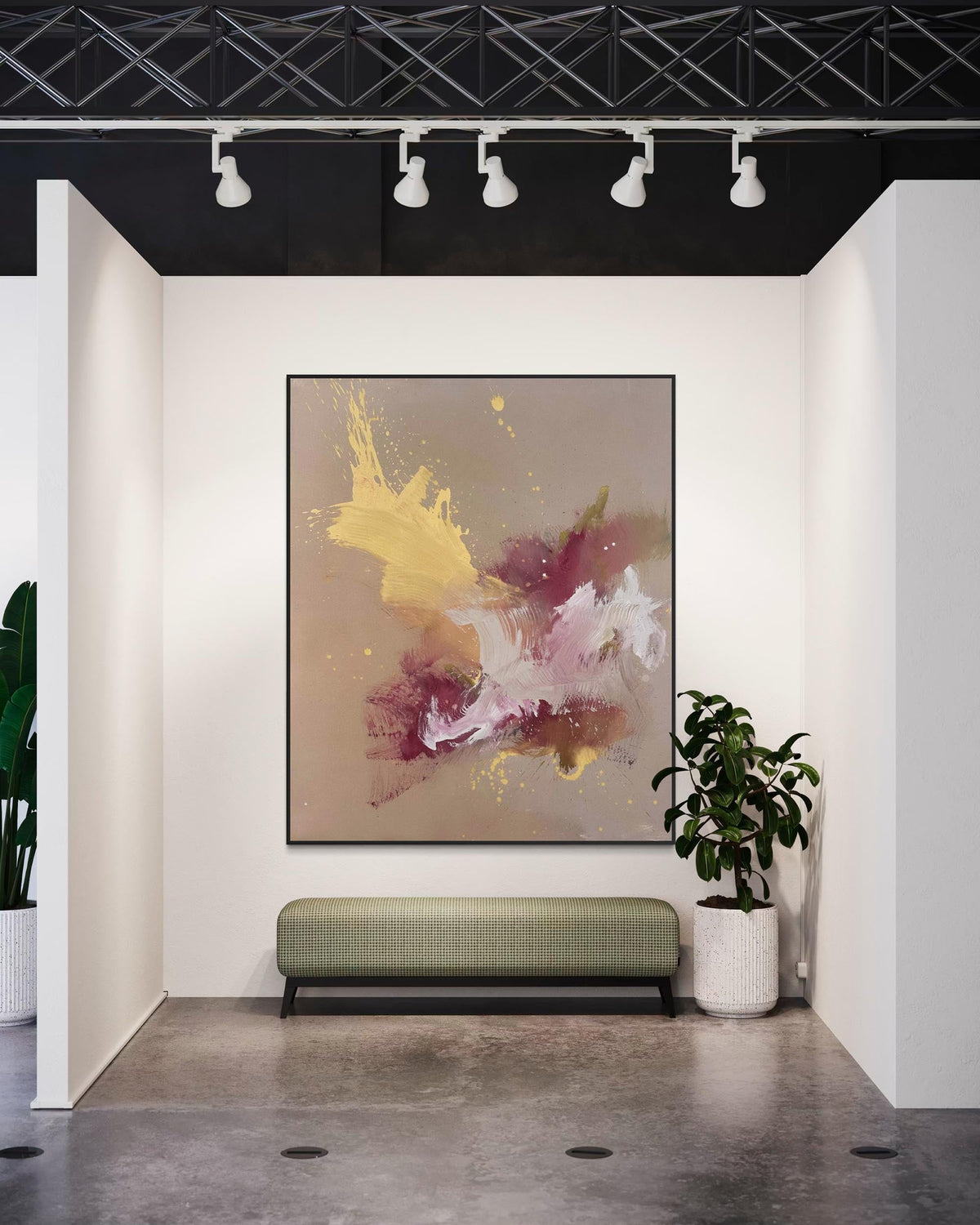
Abstract House produces original paintings made in our London studio — handmade works in oil, mixed media, and acrylic that carry this tradition forward. Browse our current collection at abstracthouse.com.