















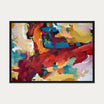



The average person spends roughly a third of their adult life in a work environment. What that environment looks, feels, and smells like is not a peripheral concern — it is a direct variable in mood, cognition, creativity, and health. And yet, many offices are designed as though the people inside them are indifferent to their surroundings: bare walls, neutral everything, a single obligatory print in the reception.
The research on what art does to a workspace is now substantial, consistent, and compelling. Original paintings in commercial environments are not a luxury — they are a performance tool.

What the Research Says
A University of Exeter study found that workers in an "enriched" environment — one decorated with art and plants — were up to 32% more productive, and reported 45% greater wellbeing and 60% higher engagement than colleagues in an undecorated, "lean" workspace. These are not marginal improvements. They are the kind of gains that, in any other business context, would justify significant investment.
A study commissioned by the British Council for Offices found that 61% of workers believe artwork makes their workplace more welcoming, and 50% say it directly improves their productivity. A survey of over 800 employees across 32 organisations found that 78% agreed that artwork helps reduce stress, 64% said it increases creativity and innovation, and 77% said it encouraged expression of opinions.
None of this is surprising when you understand what looking at original art actually does to the brain. Viewing an original painting — particularly one that invites sustained attention, rather than a decorative pattern or a motivational poster — activates the brain's reward system and stimulates the release of dopamine, the neurotransmitter associated with motivation and pleasure. The response to an original work is measurably different from the response to a reproduction: psychological research has consistently shown that people perceive greater value, presence, and meaning in objects they know to be unique.
The Original Versus the Reproduction: Why It Matters in a Commercial Context
This distinction — original versus reproduction — matters more in a commercial setting than people often realise. When clients, visitors, and employees encounter an original painting, they are encountering something with presence: a work that carries the accumulated decisions of a human intelligence, that is literally irreplaceable. Reproductions and generic prints communicate something quite different. They say: this space is decorated. An original painting says: this organisation has taste, intention, and values that extend beyond the functional.
For businesses whose spaces receive external visitors — law firms, financial services, architecture practices, hospitality, Build-to-Rent residential lobbies — this distinction is part of brand communication. The work on the wall is part of the impression made.

What Types of Painting Work in Which Spaces?
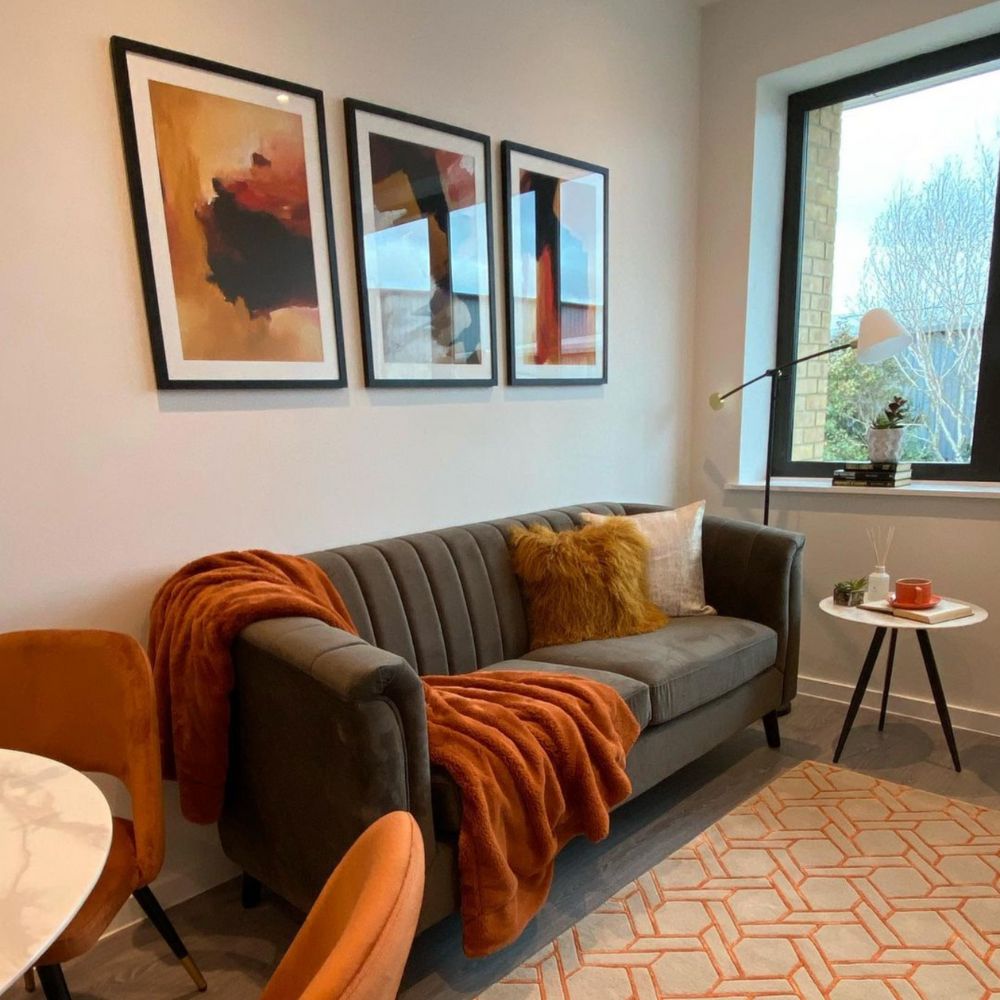
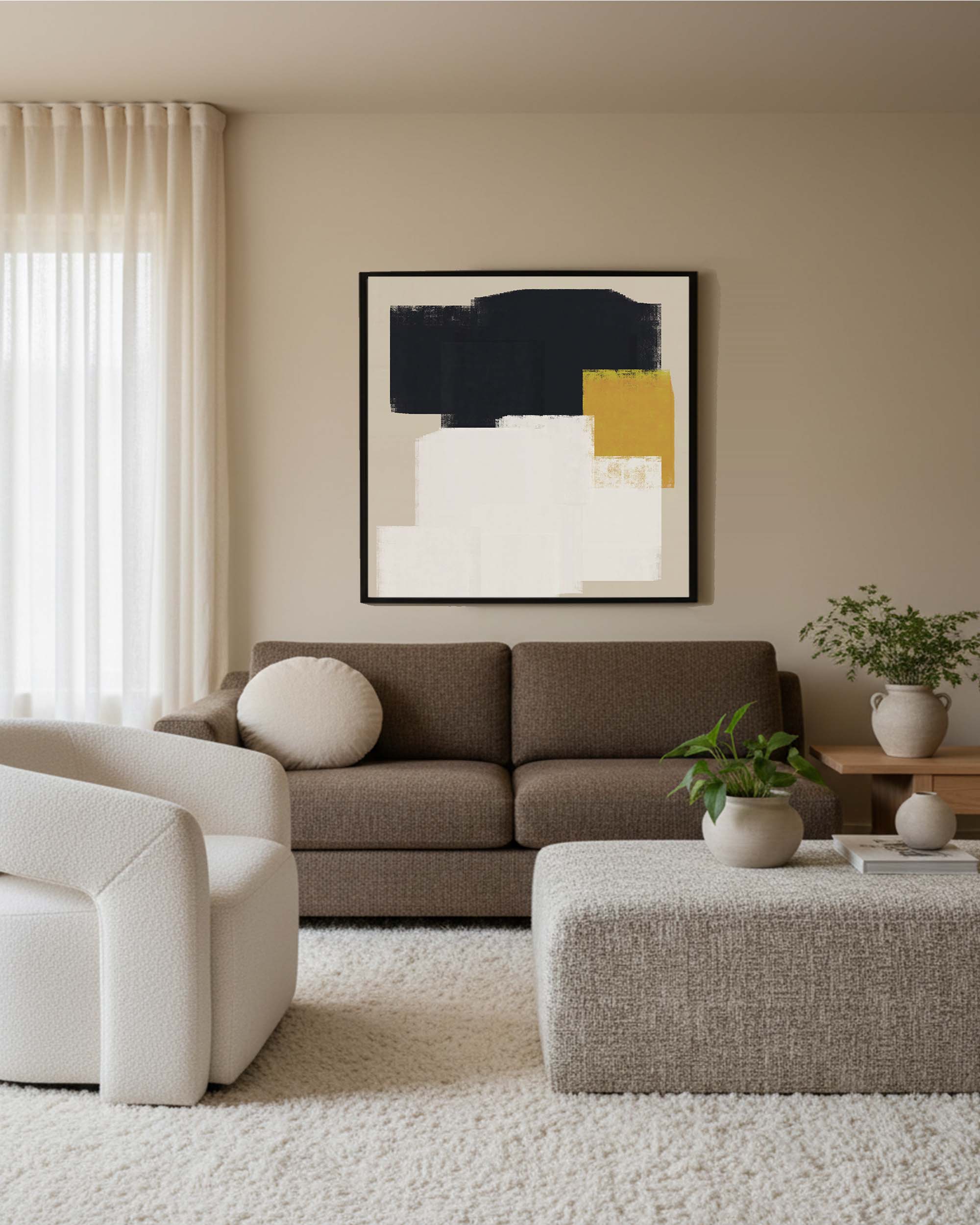
Reception and lobby: The first impression. Works here should be substantial in scale, confident in presence, and accessible rather than challenging. Large-format abstract or landscape-informed work tends to perform well — it reads clearly from a distance, creates a sense of atmosphere without requiring explanation, and accommodates the widest possible range of visitor responses. Avoid works that are too dense, textual, or conceptually demanding: a reception is not a gallery, and visitors are forming impressions quickly.
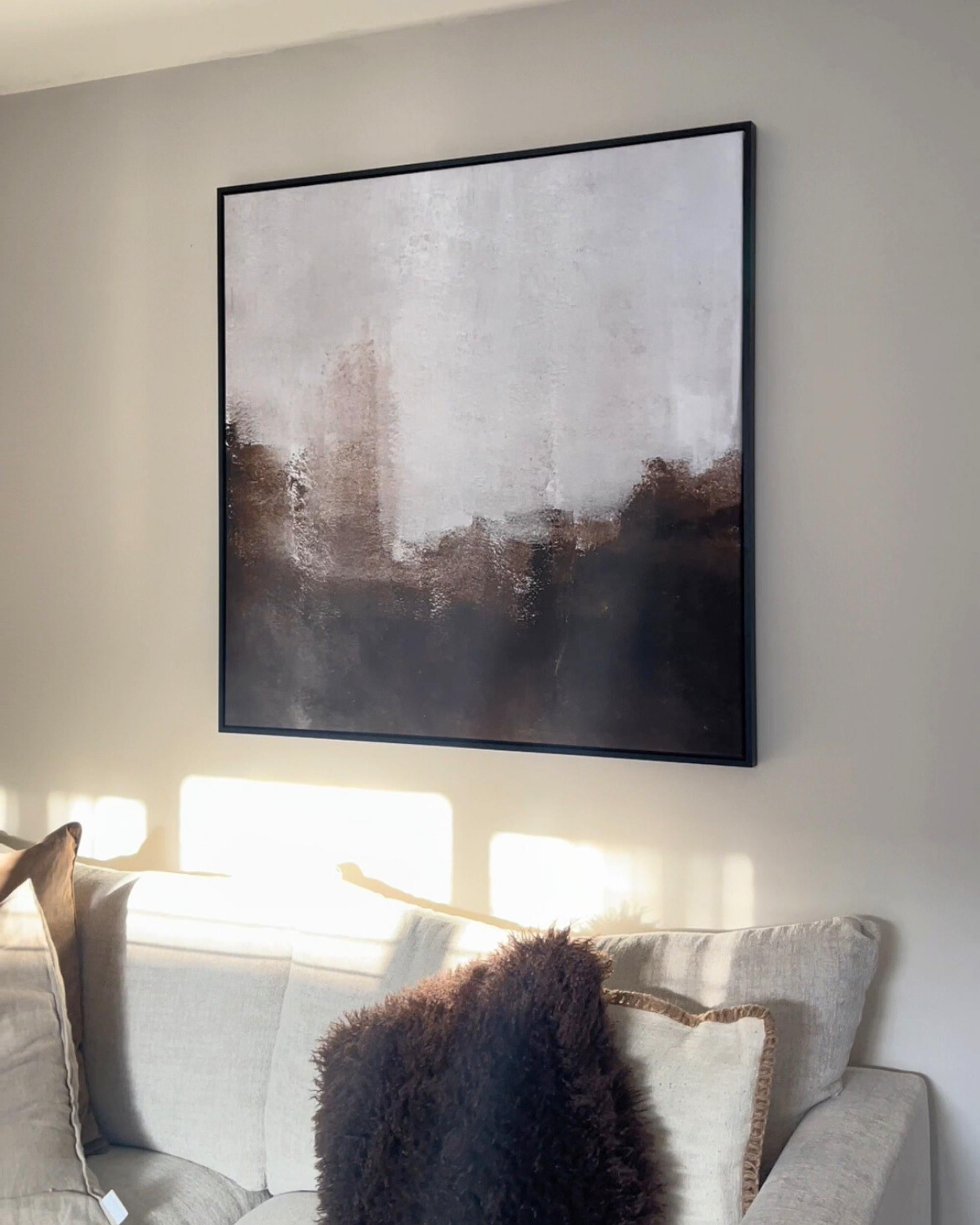
Meeting and conference rooms: These are spaces where creativity, clarity, and focused thinking are the goal. Works that reward sustained attention — pieces with textural complexity, tonal depth, or a quality of stillness — tend to suit these environments. Art that generates conversation can also be valuable: a distinctive painting in a meeting room gives people something to comment on, which eases the first few minutes of any encounter.
Open-plan working areas: The challenge here is scale and proportion. A single large work can anchor a space and provide a visual reference point. A curated sequence of smaller works — a collection rather than a single statement — can delineate zones within a larger floor plan. The goal is to avoid the sense that art has been scattered decoratively without intention.
Executive and partner spaces: These rooms often call for something personal and precise. A single significant work — sized and subject-matched to the space — communicates seriousness and discernment. This is the category where original paintings most clearly distinguish themselves from reproductions: the personal investment of the individual, expressed in the wall they work beside.
Communal and break-out areas: Arguably the most important spaces to get right. Research consistently shows that the quality of informal, rest, and social spaces in an office directly correlates with employee wellbeing and retention. Art in these spaces — particularly work that is warm, human, and inviting rather than corporate and cool — signals that the organisation cares about its people as whole people.

The Commission Route
For developers and large commercial spaces, commissioning original work directly from an artist or studio offers several advantages over buying ready-made. A commission can be scaled precisely to the architectural dimensions of a space, developed in a palette that responds to the interior design, and produced with the client's brand values and culture in mind. The result is work that is genuinely site-specific — which, again, communicates something quite different from a purchased print or a mass-produced canvas.
Abstract House offers a full commissioning programme for commercial clients, from single-room installations to multi-site BTR residential schemes. Our trade consultations begin with the space and end with original work designed for it.
A Final Note
There is something worth saying that the research cannot quite capture. An office with original paintings feels different from one without. Not visually different only — atmospherically different. The quality of attention changes. The sense that this organisation takes its environment seriously — and by extension, the people who work in it — is palpable. That is not a soft benefit. In a market where talent is the primary competitive variable, it matters considerably.
Abstract House works with interior designers, commercial specifiers, and developers to source and commission original paintings for offices, lobbies, and residential schemes. Contact us at abstracthouse.com to discuss your project.