













How To Recycle Your Packaging
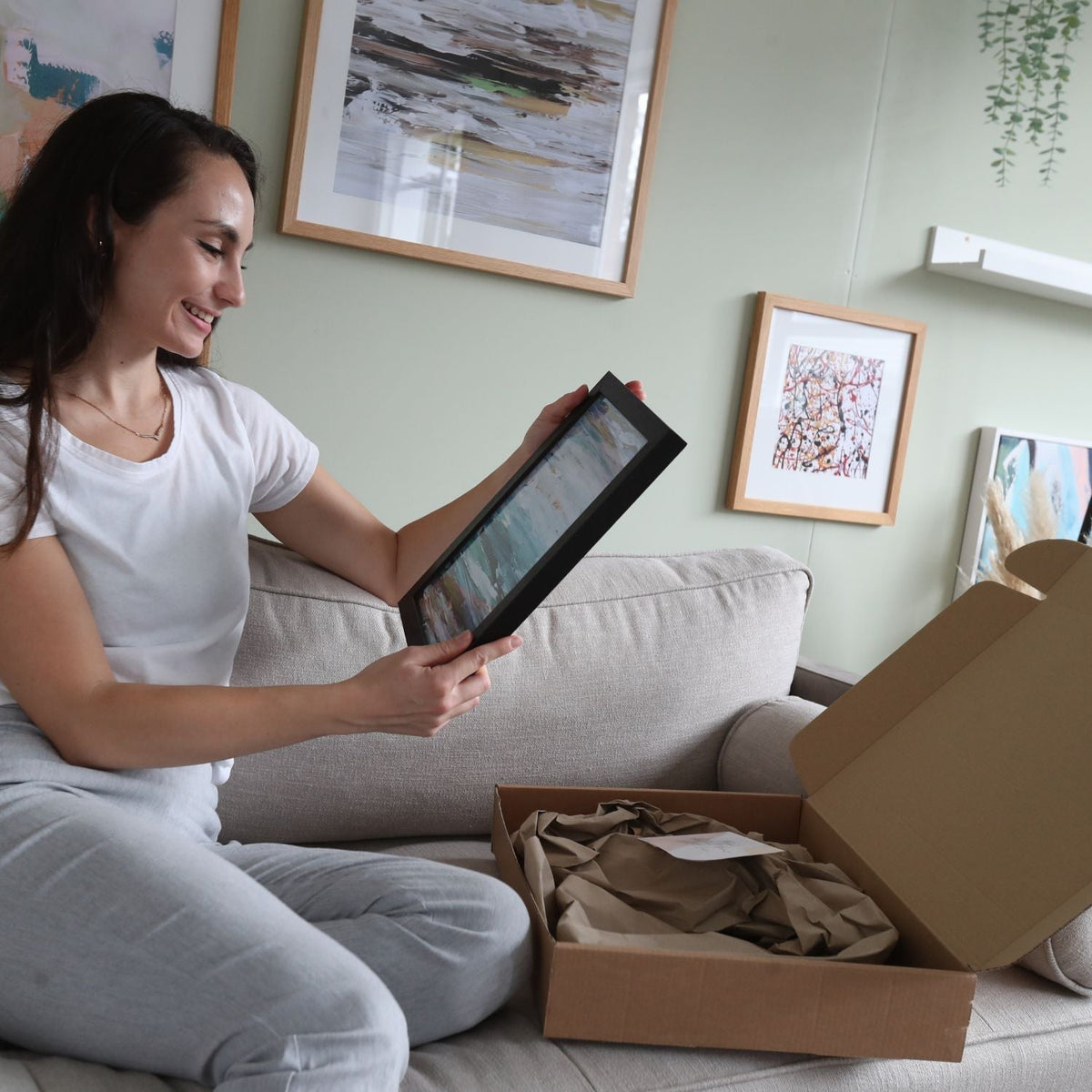
We put a lot of care into making sure your artwork arrives exactly as it should.
That means choosing packaging that protects your piece properly in transit, while keeping unnecessary materials to a minimum. Most of our packaging is made from cardboard and paper, with no foam and no plastic tape.
For additional protection, we do use bubble wrap where it is needed. After testing alternatives, we found that it remains one of the most reliable ways to protect framed artwork from knocks, pressure and damage during delivery.
The bubble wrap we use is made using recycled material and is recyclable too.
Here’s how to deal with each part of your Abstract House packaging once your artwork is safely on the wall.
Cardboard boxes
Our outer packaging is made from cardboard and can usually be placed directly into your household cardboard or paper recycling.
Before recycling it, remove any remaining packaging materials and flatten the box to save space.
If the box is still in good condition, it can also be useful to keep for storage, moving house or sending something of your own.
Reusing packaging before recycling it is always a good option where possible.

Cardboard corner protection
Framed artwork needs extra protection around its most vulnerable areas, particularly the corners.
Any cardboard corner protectors included with your order can be recycled alongside the rest of your cardboard packaging.
Simply separate them from the artwork and place them in your cardboard recycling.
Paper tape
We use paper tape instead of conventional plastic packing tape wherever possible.
Because it is paper-based, small amounts can generally remain attached to your cardboard when it is recycled. If you prefer, you can also peel it away before flattening the box.
Using paper tape helps us avoid introducing another unnecessary type of plastic into our packaging.

Bubble wrap
Bubble wrap is the only plastic packaging we currently use.
We brought it back into our packaging because protecting artwork properly matters. A damaged frame or print creates far more waste than using a small amount of protective material that can be reused or recycled.
The bubble wrap we use contains recycled material and can also be recycled.
However, bubble wrap is classed as a flexible or soft plastic, so it should not automatically be placed in your household recycling bin.
Recycling arrangements vary depending on where you live. Many supermarkets and recycling points accept flexible plastic packaging, while some local authorities offer their own collection services.
Check your local recycling guidance before disposing of it.
And before you recycle it, consider keeping it. Bubble wrap can be reused many times for moving, storage, protecting fragile objects or sending parcels.
No foam packaging
You won't find polystyrene blocks or foam inserts inside your Abstract House delivery.
Where possible, we use cardboard construction and carefully placed protective materials instead.
Removing foam from our packaging makes it easier to separate the different materials once your artwork arrives and reduces the amount of mixed packaging that needs to be disposed of.
Keep it simple
Once you've unpacked your artwork, you should be left with just a few materials:
-
Cardboard can be reused or recycled with cardboard.
-
Paper tape can usually be recycled along with the cardboard.
-
Bubble wrap can be reused or taken to an appropriate flexible-plastic recycling point.
That's it.
Packaging artwork involves a balance. We want to minimise the materials we use, but the first priority has to be making sure the piece we've made arrives safely.
We would rather use a considered amount of recyclable protective packaging than risk creating the much greater environmental cost of a damaged artwork, broken frame and replacement delivery.
Made carefully. Packed carefully.
The same thinking we put into making and framing our artwork continues through to the way we package it.
We continue to review the materials we use and look for better alternatives as they become available, without compromising the protection your artwork needs on its journey to you.
Because good packaging shouldn't just protect what is inside.
It should be considered all the way through.